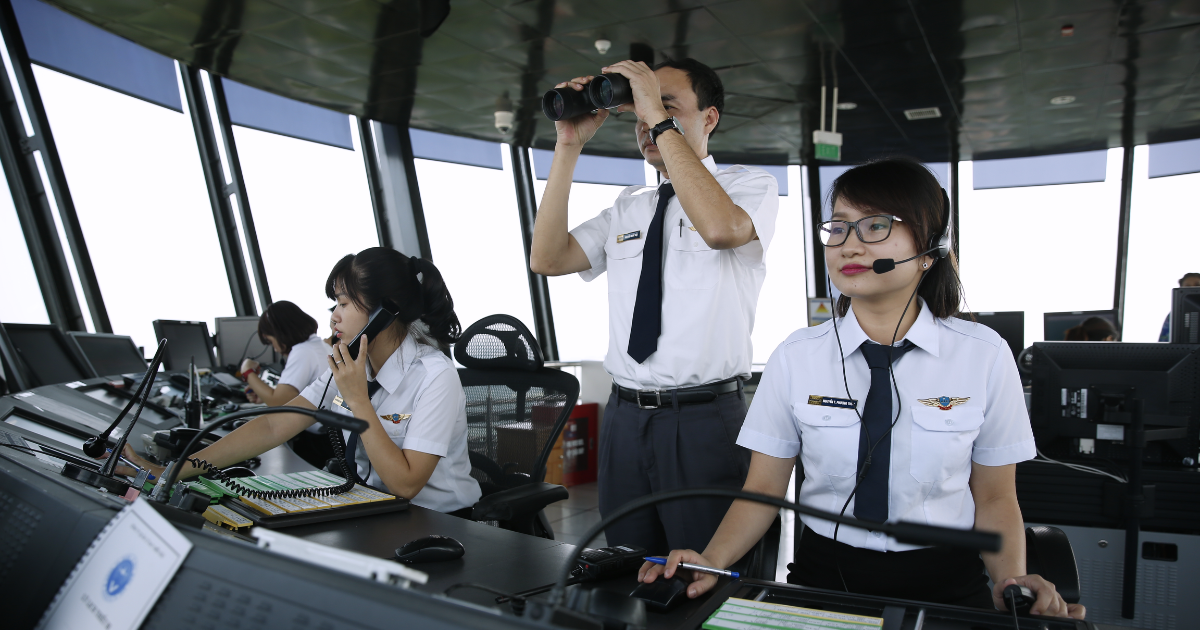
Becoming an Air Traffic Control Officer (ATCO) is a hard but rewarding journey in aviation. The training process is a carefully organized mix of knowledge, skills, and mental strength to prepare candidates to manage safe and smooth air traffic.
Step 1: Building a strong theoretical foundation
Becoming an Air Traffic Control Officer (ATCO) begins with mastering deep aviation theory. At the Vietnam Aviation Academy (VAA), trainees dive into critical subjects such as aviation meteorology, air navigation, airspace management, and flight safety principles. This essential knowledge ensures that future controllers thoroughly understand how global airspace operates, forming the vital foundation needed for split-second, real-world decision-making.
Step 2: Developing critical skills through simulator training
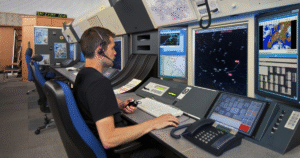
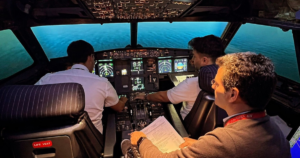
After completing their studies in the classroom, trainees progress to advanced simulation labs that replicate realistic air traffic control environments. These simulator-based exercises cover everything from routine flight management to complex emergency scenarios. Through this immersive training, students safely develop core operational competencies, including high-level situational awareness, rapid information processing, precise communication, and multitasking under pressure.
Step 3: Learning from seasoned industry mentors
A crucial pillar of an ATCO’s professional growth is direct mentorship from experienced instructors and active aviation professionals. By analyzing real-world case studies and absorbing lessons shared from actual careers, trainees gain valuable operational perspectives that go far beyond standard textbooks. This exposure helps students build a strong safety-first mindset and a highly professional attitude early in their careers.
Step 4: Meeting stringent standards and assessments
Before qualifying to guide live aircraft, trainees must successfully pass a series of strict, multi-layered assessments. These evaluations test technical knowledge, clear communication proficiency, and emotional stability during high-stress situations. Because every choice in the control tower directly affects aviation safety, meeting these rigorous international standards ensures that only the most capable individuals are certified.
Step 5: Stepping into the professional responsibility
The final stage of the journey transforms qualified trainees into active guardians of the sky. Achieving an ATCO qualification demands exceptional adaptability, unwavering concentration, and a commitment to lifelong learning. Armed with a comprehensive educational foundation from VAA, these future controllers stand fully equipped to maintain operational efficiency and support the sustainable growth of the international aviation industry.
Ultimately, the strict journey to becoming an Air Traffic Control Officer ensures that only the most dedicated individuals take responsibility for our skies. As these qualified professionals step into live control towers, their elite training becomes the silent backbone of global flight safety.